Transport minister inaugurates 281km of highways, main roads in Sistan-Baluchestan
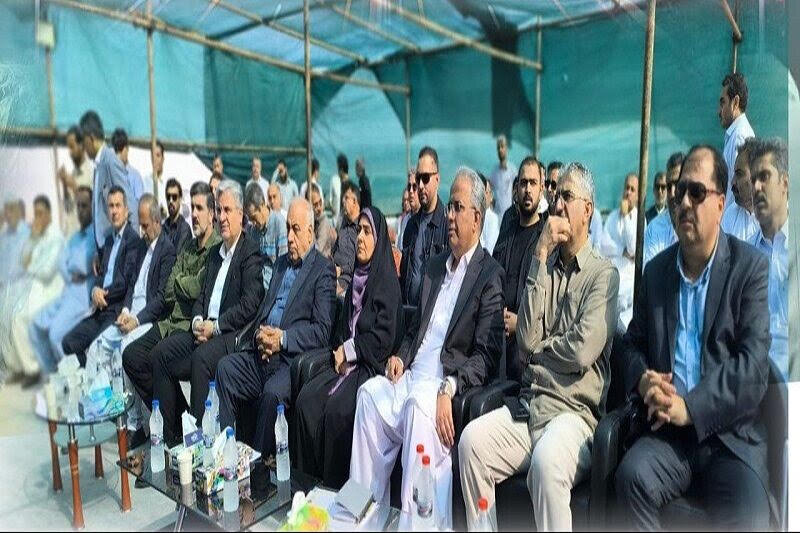
TEHRAN- With the presence of the Minister of Transport and Urban Development, 281 kilometers of highways and main roads in Sistan-Baluchestan province were put into operation. Of the inaugurated projects, 134 kilometers are in the south of the province, 89 kilometers in the north, and 58 kilometers on the North-South Corridor and coastal routes of the province.
According to IRNA, the deputy minister of transport and urban development said at the ceremony that inaugurating transport infrastructure is not merely a construction measure. He said that operating 281 kilometers of main roads and highways in Sistan-Baluchestan increases part of the province’s economic power and security.
Houshang Bazvand, while commemorating Sacred Defense Week, thanked the Minister of Transport and Urban Development for his attention to developing transport infrastructure in the province.
Referring to Sistan-Baluchestan’s capacities, he said: “With the measures taken and the governor’s follow-up, Sistan-Baluchestan can no longer be considered a remote region today, and this province has become an economic and trade gateway for the country.”
The deputy minister of transport and urban development, referring to the minister’s approach to infrastructure development, added: “Inaugurating transport infrastructure is not only the inauguration of a construction project; it is part of the country’s and the province’s economic power and also part of their economic security.”
He continued: “This approach has been pursued at the national level, and the experience of war also showed the importance of this strategy and of attention to infrastructure.”
The CEO of the Construction and Development of Transportation Infrastructure Company also thanked the performance of the Directorate General of Transport and Urban Development of South Sistan-Baluchestan.
Bazvand, referring to the country’s coastal corridor, said: “This corridor extends from Khuzestan province to Sistan-Baluchestan, and more than 1,116 kilometers of it is located in Sistan and Baluchestan province.”
He also referred to the East-West Corridor and added: “This corridor begins at the Mirjaveh border and, passing through Sistan and Baluchestan, Kerman, Fars, and Kohgiluyeh-Boyer Ahmad provinces, reaches Khuzestan.”
The deputy minister, stating that the physical progress of different parts of these corridors varies, emphasized the need for special attention to the coastal corridor from Jask to Chabahar.
Bazvand, referring to the operation of 281 kilometers of main roads and highways in the province, said: “These 281 kilometers are not merely the inauguration of a construction project; they are part of the province’s economic power and security.”
Referring to the minister’s emphasis that a road is a great wealth, he added: “Our view must change from the road as a project to the road, then the corridor, and ultimately the economy.”
The CEO of the Construction and Development of Transportation Infrastructure Company stressed: “Corridors can play a role in the province’s economy and security, and operating these projects increases part of the province’s economic capacity.”
Bazvand thanked Farzaneh Sadegh, Minister of Transport and Urban Development; the governor of Sistan-Baluchestan; deputies and directors of the Ministry of Transport and Urban Development; the provincial deputy for development; governors; and all those involved in implementing the projects.
According to IRNA, Sistan-Baluchestan, due to its geographical expanse, the long distance between population centers, its location on important national and international corridors, access to open waters, proximity to Afghanistan and Pakistan, and its port, transit, mining, agricultural, tourism, and border trade capacities, needs a safe, fast, and standard transport network more than many other regions of the country.
In such a large geography, a highway is not only a construction project; it is part of the infrastructure for economic, security, social, and territorial development. Every kilometer of a four-lane route in Sistan and Baluchestan can reduce the distance between production and market, port and hinterland, city and village, border and the center of the country, and even economic opportunity and population.
A review of the 14th government’s two-year performance in the roads sector of Sistan-Baluchestan shows that the policy of developing communication infrastructure in this period has moved beyond the stage of defining projects and study promises and has reached the stage of implementation, completion, and operation in a significant part.
According to announced statistics, 59 highway and main road construction sites are currently active across the province, with 16 sites operating in the north and 43 in the south.
These sites have provided employment for about 6,000 people.
The activity of this number of sites, in addition to creating direct employment for executive forces, has significant indirect effects on the local economy. The activity of contractors, heavy machinery, material supply, transport, technical services, equipment repair and maintenance, and the supply chain of projects activates a set of dependent economic activities around construction projects.
From this perspective, highway projects can also be considered part of the province’s employment and economic prosperity policy.
The governor of Sistan-Baluchestan, referring to the completion of rail-laying operations for the Chabahar-Zahedan railway, stated: “Rail laying on the Chabahar-Iranshahr route has been completed, and the rail connection of this area has been made. Rail-laying operations in the Chabahar port area have also been carried out, and the project has now entered the stage of completing operations and preparing for operation.”
According to IRNA, Mansour Bijar said on Thursday during a visit by Farzaneh Sadegh, Minister of Transport and Urban Development, to the Chabahar-Zahedan railway project: “After the special order of the Minister of Transport and Urban Development, the necessary actions and plans to accelerate the completion of the project were placed on the agenda, and in this regard, the supply of needed tools, equipment, and machinery for the project increased.”
He continued: “So far, 60,000 packages of technical equipment, including bolts, springs, guides, and pads, have been sent to the sites, and planning has been done to supply other needed equipment. Also, the number of project locomotives has increased from one to four, tamping machines from 2 to 3, and regulator equipment has also increased.”
The governor of Sistan-Baluchestan, referring to measures taken to supply the switches needed for the project, stated: “Fifty-five switches needed for the project have been purchased, 28 of which have been sent to the project so far, and the remaining 27 must be sent before 15 Mehr.”
He also announced an increase in ballast transport and production capacity and said: “The number of ballast transport wagons has increased from 17 to 70, and it is planned that this number will reach 105 wagons within the next 10 days. Also, daily ballast production has increased from 1,000 cubic meters to 2,500 cubic meters.”
Bijar, stating that executive operations in different sections of the route are being pursued quickly, said: “So far, 134 kilometers of rail welding and 55 kilometers of second-layer ballast have been carried out in the Chabahar-Iranshahr area.”
Referring to the project’s progress in the Iranshahr-Khash area, he added: “Last year, rail-laying operations on this route were pursued despite existing constraints and the difficult conditions of the region, and the Khash-Iranshahr section was also completed, and now it is possible to use this route.”
The governor of Sistan-Baluchestan, referring to the schedule for operating the project, said: “A schedule has been prepared for the operation of this project by the end of Dey, and the remaining actions are being pursued according to this schedule.”
Farzaneh Sadegh, Minister of Transport and Urban Development, visited the Chabahar-Zahedan railway project during her one-day trip to Sistan-Baluchestan. With its implementation, the country’s only oceanic port will be connected to the national rail network.
The Chabahar-Zahedan railway project has a direct length of 630 kilometers, and its length, including branch lines, reaches 735 kilometers.
According to information about this project, the passenger transport capacity of the Chabahar-Zahedan railway is 2.2 million people, and its freight transport capacity is 7.7 million tons.
The project includes 39 tunnels with a total length of 17 kilometers, 201 intersections and special bridges, and about 2,000 culverts.
Also, in implementing the Chabahar-Zahedan railway project, 90,000 tons of domestically produced rail will be used, and the project has 33 stations.
The earthworks volume of this project is 70 million cubic meters, and its concrete pouring volume is 2.5 million cubic meters.
During this one-day trip, the Minister of Transport and Urban Development will also participate in the centralized inauguration ceremony of projects in the area of the Construction Company and Road Maintenance Organization, the operation of housing units for the disadvantaged, regeneration target projects, and the inauguration of port projects in Sistan-Baluchestan province.
A group of deputies of the Ministry of Transport and Urban Development accompanied the minister on this trip.
The Secretary of the Supreme Council of Free Trade-Industrial and Special Economic Zones, emphasizing the strategic capacities of Chabahar’s ports, described the development of port infrastructure and the strengthening of its commercial activities as requirements for the development of Makran.
According to Mehr News Agency, Hossein Forouzan, Secretary of the Supreme Council of Free Trade-Industrial and Special Economic Zones, during a trip to Chabahar, visited Shahid Kalantari and Shahid Beheshti ports and closely examined the operational capacities, port infrastructure, and the implementation process of development plans for these two ports.
During this visit, the existing capacities of Chabahar’s ports to support commercial and transit activities, the requirements for infrastructure development, and upcoming opportunities to increase the role of these ports in the regional economy were examined.
Shahid Beheshti and Shahid Kalantari ports in Chabahar, with their strategic location on the Makran coast and direct access to oceanic waters, have considerable capacity for developing trade, transit, and the country’s economic links with regional and international markets.
During this visit, emphasis was placed on the need to make maximum use of the port capacities and the Chabahar Free Zone and to strengthen coordination among relevant sectors to accelerate development projects and boost economic activities.
MA
Leave a Comment